Flasks of irradiated fuel from both Magnox and LWR reactors were imported by sea through Barrow Docks, principally from Japan from the 1960’s to 2005 when such transports were stopped. Originally a fleet of five ships, owned by Pacific Nuclear Transport Limited (PNTL) – of which BNFL was a major share holder, were dedicated for this work together with one BNFL-owned ship used for transports from Europe, principally Germany and Switzerland.
The fleet that originally consisted of the Pacific Swan, Crane, Pintail, Teal and Sandpiper – all of whom were registered at Barrow and carry a crew 20-30 strong – has since been replaced by three new ships all custom-built in Japan. The Pacific Heron and Pacific Egret, both armed with naval canon, are used to carry contentious cargos such as plutonium, while the Pacific Grebe is used for the return of High Level Wastes from Sellafield to Japan. Ownership of the old PNTL ship Pacific Pintail was transferred to Sellafield’s new owners the Nuclear Decommissioning Authority and is used for Atlantic and North Sea transports under her new name Oceanic Pintail.
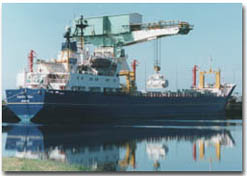
Unloading flasks at Barrow
When the ‘spent fuel’ from overseas arrived at Barrow it was offloaded from the ship in BNFL’s Marine Terminal at Ramsden Dock and the nuclear flasks transported on special rail wagons on the one-hour rail journey to Sellafield along the West Cumbrian coast, through local towns and villages. Much of that fuel has now been reprocessed. The empty transport flasks, refurbished as necessary at Sellafield were returned to the overseas customer by the same route.
An assortment of flask types, some weighing up to 100 tonnes and carrying 3 or 4 tonnes of fuel, was used for LWR fuel imports, depending on the reactor station and the fuel type (PWR or BWR). At the peak of operations, each Pacific ship would make between 1 and 2 visits to Barrow per year, unloading on average 6 – 8 foreign flasks from Japan. Some 4 – 6 flasks from Europe would arrive once or twice per month.
Whilst those imports have ended, the rail link between Sellafield and Barrow is largely used for the return of High Level Waste to overseas customers via Barrow docks, the return to Sellafield of empty flasks and other eqipment and on one occasion only for the transport of MOX fuel from Sellafield to Japan which, rejected by Japan on quality assurance issues, was subsequently returned to Sellafield.
Rail haulage to and from Barrow docks is today provided by Direct Rail Services (DRS) which was formed in 1995 specifically for the transport of spent fuel from UK reactor stations to Sellafield. As a wholly owned subsidiary of the Nuclear Decommissioning Authority, DRS now has other major commercial contracts, with its nuclear business accounting for some 30% of its overall portfolio.